

Related Posts


Candy Corns – whether you love ‘em or hate ‘em, you RECOGNIZE THEM.
What Candy Corn Can Teach Us About Reading and Dyslexia
Picture a piece of candy corn.
Three distinct layers.
Each one building on the one below it.
Now imagine eating only the top layer, and wondering why it doesn’t taste quite right.
That’s what it’s like when we teach kids to memorize whole words instead of showing them how reading actually works.
Reading is layered, just like candy corn.
And when children with dyslexia are taught to rely on memorization, without understanding letters, sounds, syllables, and patterns, they miss the foundational layers.

They might manage to guess their way through for a while.
But eventually, the gaps catch up with them.
This is what we see in so many struggling readers:
-
They rely on the first letter of a word.
-
They guess based on context or pictures.
-
They don’t understand why “one” doesn’t sound like it looks.
-
They panic when they meet a new word they haven’t memorized.
Here’s the truth:
You can’t build a solid reader by skipping the bottom layers.
And no amount of guessing will replace real decoding skills.
That’s where Structured Literacy comes in.
Structured Literacy is explicit, cumulative, and systematic.
It teaches students to understand the structure of language, starting with the sounds of speech and building all the way up to complex multisyllabic words.
It fills in the missing layers.
It gives kids the tools to read any word, not just the ones they’ve memorized.
So next time you see a candy corn, think about reading.
Think about what happens when we skip the base.
And remember: when we teach reading the way the brain learns, kids don’t have to guess anymore.
They decode. They read. They thrive.
Keep reading practice short
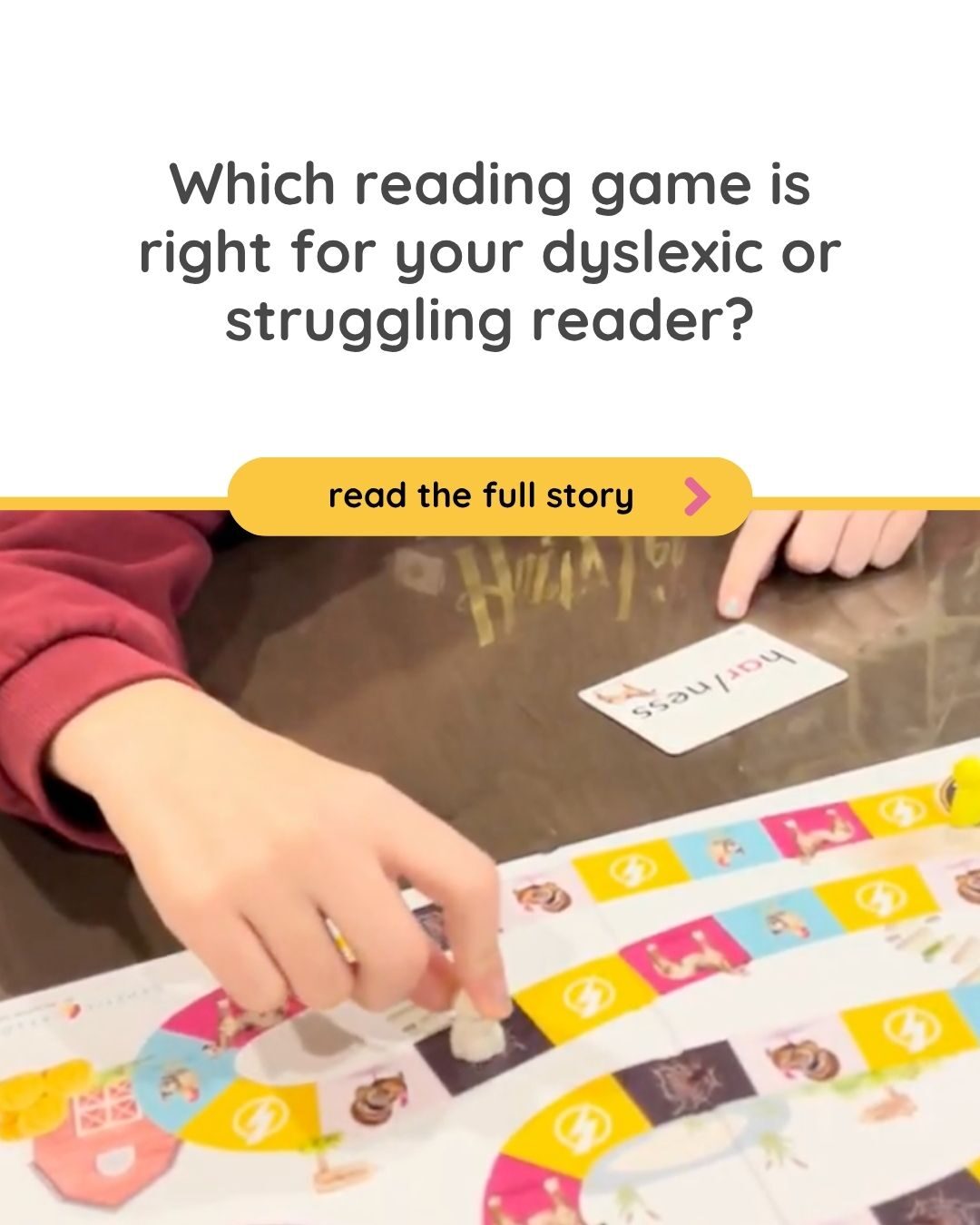
You do not have to work on everything at once. Choose one skill and practice it for 10 or 15 minutes.
Repeat the game over several sessions before moving on. Dyslexic children often need more repetition, but that repetition does not have to feel like another worksheet.
Games give children a reason to keep looking, listening and trying.
Find the right place to begin
The best reading games for dyslexic children meet them at their current skill level and provide focused practice without making reading feel overwhelming.
Your child does not need more random practice. They need the right practice for the skill they are finding difficult.
Choose one game. Start with one level. Celebrate each small win.
Stop guessing. Start decoding.
The Genesis Reading Team

Discover more articles like this | Explore educational games to support learners and homeschooling.
