

Related Posts


Back in the day, I was all about Tae Bo—those early Billy Blanks videos had me punching, kicking, and stumbling around my tiny New York apartment. The short bursts of movement, repeated daily, were tough at first. But with practice, something clicked. My coordination improved, the sequences became automatic, and eventually… I stopped breaking things!
What made the difference? Cumulative practice.
By learning each move in isolation and then weaving them together step by step, I built true mastery. After a few months, I didn’t have to think about each movement; it was automatic. I could confidently walk home late from work knowing my reflexes were sharp. Tae Bo had become second nature.
And that’s exactly how Structured Literacy works.
Just like Tae Bo builds muscle memory, Structured Literacy builds reading fluency. It teaches the building blocks of language—like phonemes, syllables, and spelling patterns – in a carefully sequenced, explicit way. Students practice each skill in isolation and then combine them, reinforcing their learning every step of the way.
This cumulative, targeted approach creates automaticity, the kind that transforms struggling readers into confident decoders, syllable superstars, and fluent readers who can tackle anything the classroom throws at them.
Structured Literacy doesn’t just teach kids to read.
It equips them to own their reading.
It’s time to kick balanced literacy to the curb and train our students like the reading warriors they are.

Keep reading practice short
You do not have to work on everything at once. Choose one skill and practice it for 10 or 15 minutes.
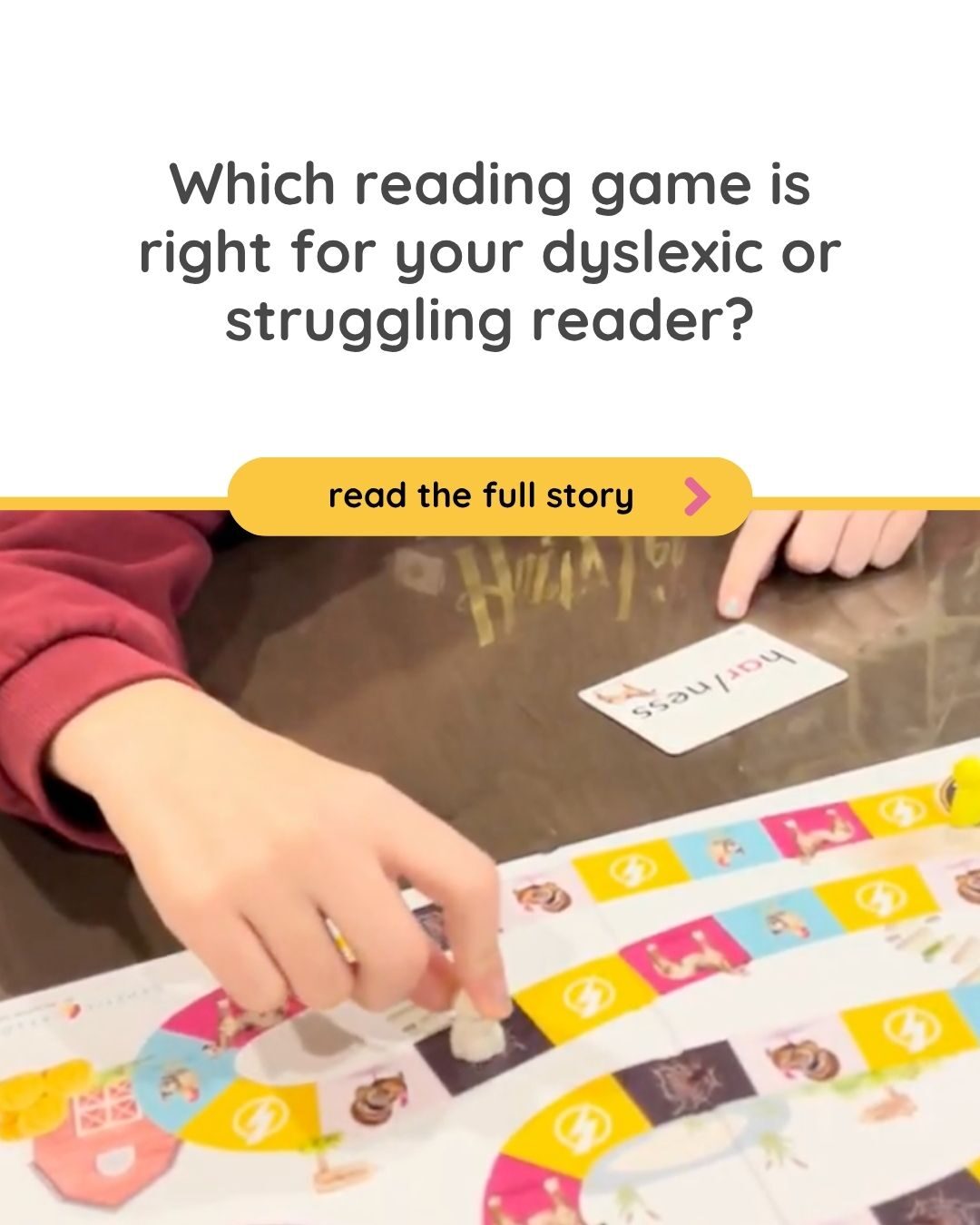
Repeat the game over several sessions before moving on. Dyslexic children often need more repetition, but that repetition does not have to feel like another worksheet.
Games give children a reason to keep looking, listening and trying.
Find the right place to begin
The best reading games for dyslexic children meet them at their current skill level and provide focused practice without making reading feel overwhelming.
Your child does not need more random practice. They need the right practice for the skill they are finding difficult.
Choose one game. Start with one level. Celebrate each small win.
Stop guessing. Start decoding.
The Genesis Reading Team

Discover more articles like this | Explore educational games to support learners and homeschooling.
