

Related Posts
When my kids auditioned for Mary Poppins, I had one big question:
How will my apraxic, dyslexic, ADHD child handle this veeeeeerrrrrry looooooooonnng word…?
Yep—Supercalifragilisticexpialidocious!
14 syllables.
18 consonants.
16 vowels.
Let’s break it down:
Su per cal i fragil is tic ex pial id o cious
S-U-P-E-R
C-A-L-I-F
R-A-G-I-L
L-I-S-T-I-C
E-X-P-I-A-L
I-D-O-C-I-O-U-S
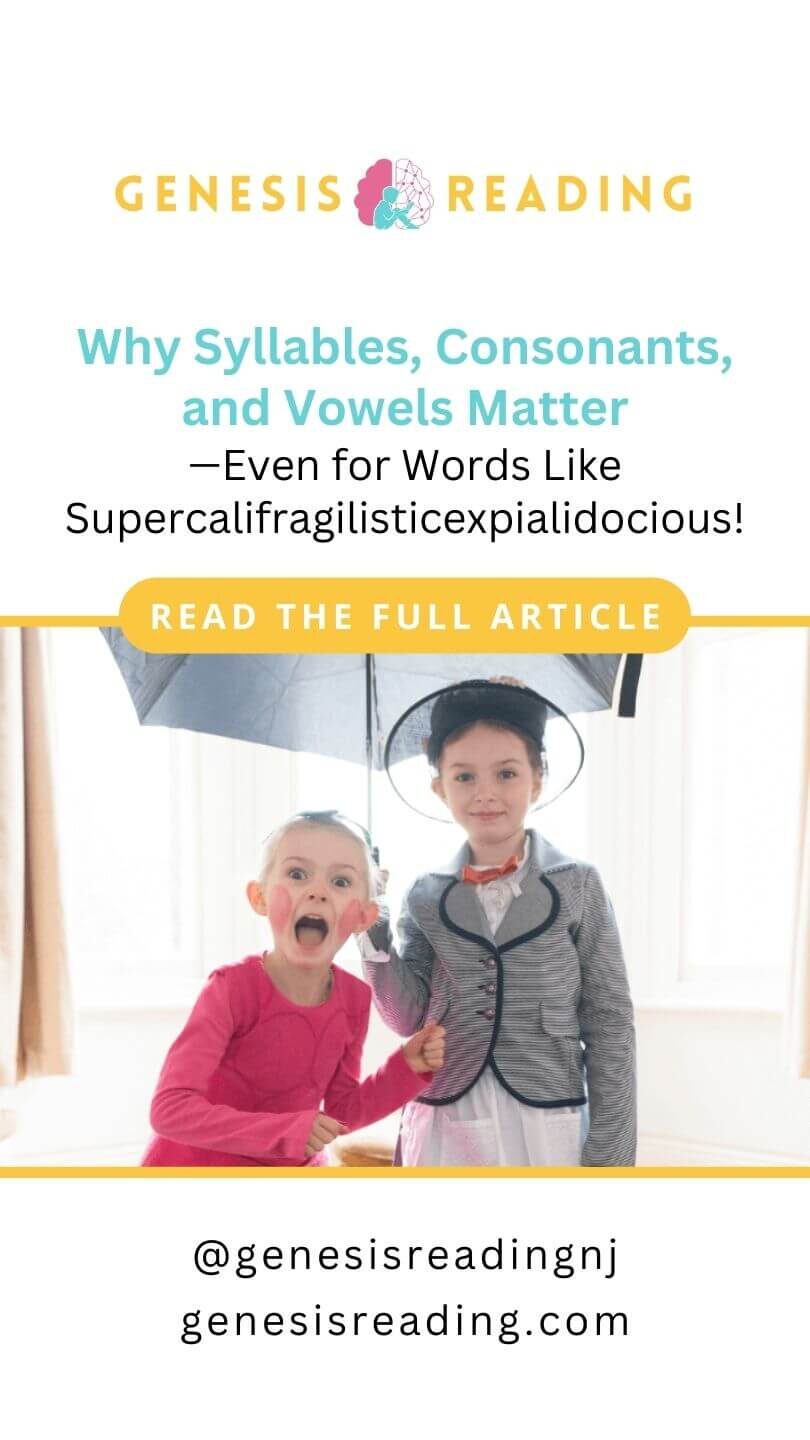
It really is quite atrocious!
But just like Mary Poppins descending from the sky with her umbrella, Structured Literacy floats in and brings calm to the chaos for struggling readers.
You see, English isn’t random.
It’s built on a system, a canopy of six syllable types that support the entire structure of our language. When kids learn to identify these patterns and understand how consonants and vowels work together, something magical happens.
Suddenly, the overwhelming becomes manageable.
The guessing stops.
And the decoding begins.
With an explicit, systematic approach, Structured Literacy helps children recognize patterns, master sounds, and read with fluency and confidence, even when the words are as long and wild as supercalifragilisticexpialidocious.
Because when we give kids the right tools, they can read anything.
Um-diddle-diddle-um-diddleye…
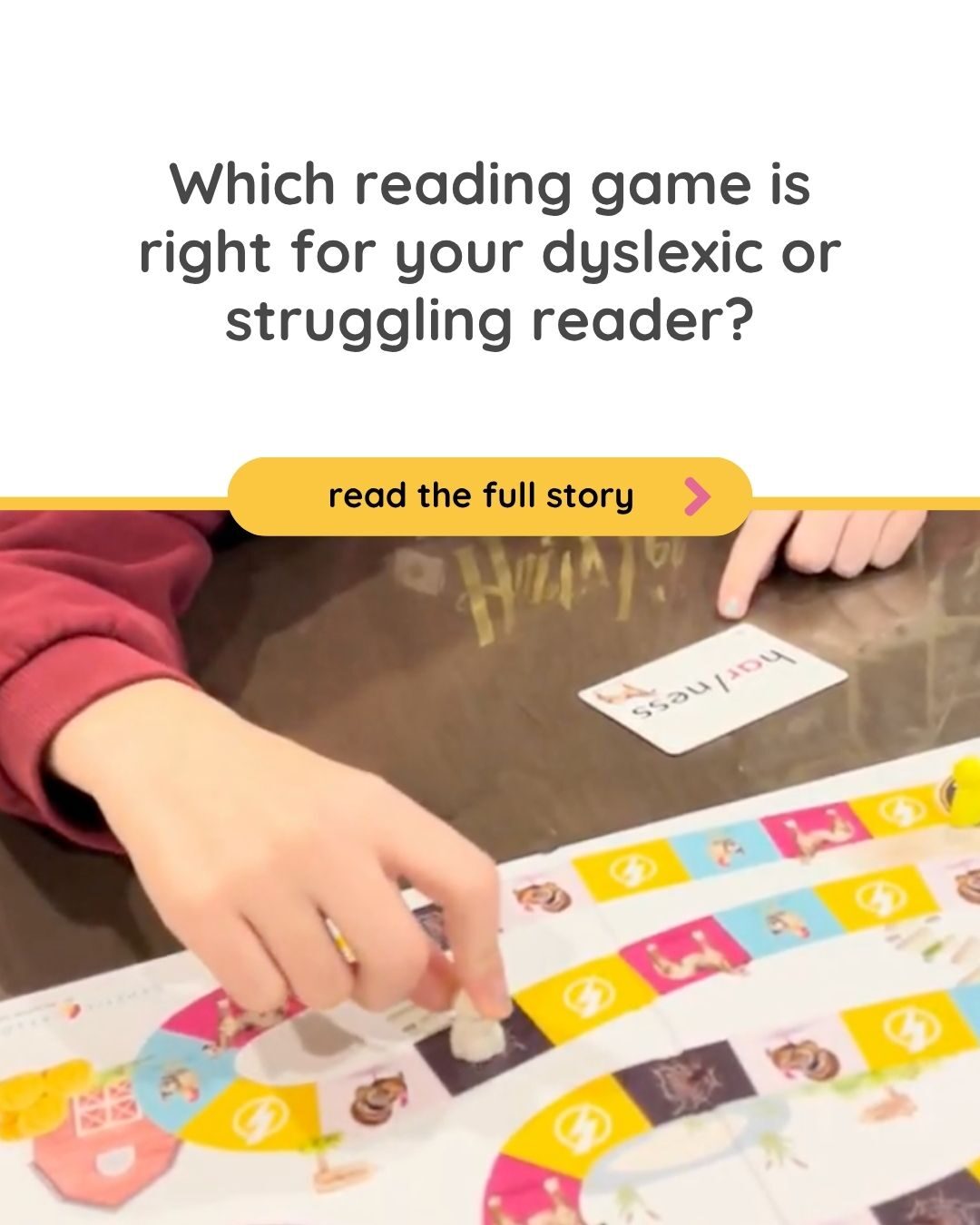
Keep reading practice short
You do not have to work on everything at once. Choose one skill and practice it for 10 or 15 minutes.
Repeat the game over several sessions before moving on. Dyslexic children often need more repetition, but that repetition does not have to feel like another worksheet.
Games give children a reason to keep looking, listening and trying.
Find the right place to begin
The best reading games for dyslexic children meet them at their current skill level and provide focused practice without making reading feel overwhelming.
Your child does not need more random practice. They need the right practice for the skill they are finding difficult.
Choose one game. Start with one level. Celebrate each small win.
Stop guessing. Start decoding.
The Genesis Reading Team

Discover more articles like this | Explore educational games to support learners and homeschooling.
