

Related Posts
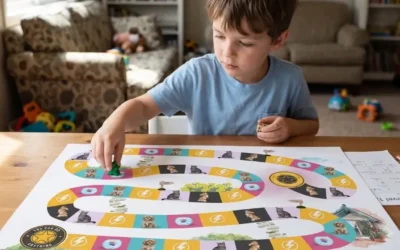

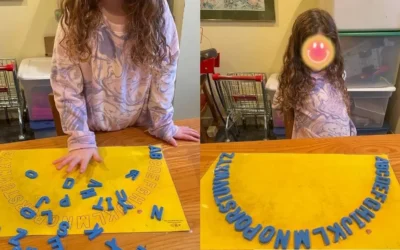
Before we dive into the 10 signs your child might be dyslexic, I wanted to acknowledge that if you’re here because something about your child’s reading is tugging at you, trust that instinct. Here at Genesis Reading, you’re stepping into a space built for clarity, confidence, and kids who need someone to unlock the way they learn.
When my son was in 3rd grade, I was told to wait. Even typing that makes me angry. Third grade…and the advice was, “Wait, reading will click. Give it time.”
It didn’t click.
More time only made things worse. His frustration grew, his confidence dropped, and connecting with peers became harder. Teachers called him bright and funny, but none of it matched his ability to read and write ability.
And when that frustration finally showed up as behavior, that became the focus…not the reading, which was the real issue. Suddenly, he was being pulled for social skills while the literacy problem was quietly ignored.
This is where parents like me burn. We trusted the system. And our kids paid the price.
Around the same time, my daughter was in a toddler program and struggling in her own way with language – specifically speech articulation. It became clear that something deeper was going on. Both of my kids were bright, curious, and capable, yet accessing language was confusing, slow, and exhausting.
This time, I didn’t wait. I got her intervention alongside her older brother. And once they received structured, evidence-based support, everything changed. My daughter went from feeling lost in the classroom to graduating with straight A’s. My son made meaningful progress once he finally understood why reading felt so impossible.
Why Behavior Is Often the First Clue
Many parents notice behavior long before they notice reading struggles. The signs often start in preschool or kindergarten.
You might see a child who:
✓ plays the class clown
✓ can’t sit still or drifts off
✓ seems overly energetic
✓ doesn’t follow directions
✓ knows so much but struggles to express it on paper
Most of the time, these behaviors aren’t defiance. They’re kids lost in a world of words, rules, and patterns they don’t yet understand.
Many classroom directions rely on language processing and spatial understanding. When kids struggle, it’s not defiance, it’s decoding. But here’s the exciting part: this is your moment to model, demonstrate, and truly change a child’s life.

Directions like:
✓ “Get on the line.”
✓ “Sit in between your friends.”
✓ “After Max, you’re next.”
✓ “Sit on the circle.” Some kids look for an actual circle!
If a child struggles with these concepts, it can look like they are not listening when the truth is that the words are not landing. Prepositions, like on, in, after and next, are very abstract, so modelling is a super fun and enjoyable way to communicate the message to all kids….and they love this kind of visual demonstration!
Once a child has figured out where to stand ‘on the line’ or where to sit ‘on the circle’, we have achieved huge structural stability. Now, we can start to teach early sounds and letter recognition so that school can feel safe, not confusing, embarrassing, and scary. Some children decide it is better to be the silly one or the troublemaker than the one who cannot read.
Instead of “What’s wrong with you?” a more accurate question is “What’s confusing for you?” or “What can I make clearer for you?”
With that in mind, here are 10 signs your child might be dyslexic:

Difficulty Hearing the Sounds in Words
Children with dyslexia often struggle with phonemic awareness. You may notice that rhyming, breaking words into sounds, or clapping syllables feels hard.
✓ Trouble hearing the separate sounds in a word
✓ Difficulty blending sounds together
✓ Avoiding sound-based games
When I asked one of my students how many syllables were in the sentence, ‘My sister and I walked home from the park,’ she couldn’t because she was unable to distinguish between words and syllables.

Trouble Remembering Letter Sounds
If your child keeps forgetting the same letter-sound pairing, even after practice, their brain isn’t making automatic connections yet, and that’s an opportunity.
You might notice:
✓ they know it on one page but not the next
✓ they confuse common sounds
✓ they need constant reminders
That moment when you think, “We just practiced this!” is actually your lightbulb moment. You’re one step closer to the solution.
This isn’t lack of effort. It’s a sign they need structured, multisensory instruction to lock it all in.

Slow, Effortful Reading That Does Not Improve
Children who struggle with decoding read as if every word is brand new.
You might see:
✓ slow, choppy reading
✓ losing their place
✓ sounding out the same word again and again
None of this leads to comprehension, so of course motivation drops. It’s not that they don’t crave knowledge, they do. They just don’t yet have the skills to access it independently.
This is your chance to keep their brain engaged while we build the decoding muscles they need. Without support, the effort becomes exhausting and discouraging over time. But we can change that!

Guessing at Words Instead of Reading Them
Guessing is a common coping strategy.
Kids may:
✓ Use pictures to guess
✓ Read the first letter or word and make up the rest
✓ Memorize books instead of reading the words
Guessing blocks true decoding and often leads to wrong answers… and embarrassment. Spotting guessing is your cue and this is fixable.

Avoiding Reading or Reading Aloud
Avoidance is often a sign of fear or overwhelm.
✓ Needing the bathroom right at reading time
✓ Knocking things over
✓ Making jokes to distract
✓ Meltdowns during homework
This is not laziness. It is self-protection. The behavior speaks to the underlying root cause… a reading problem…and a child should never be forced to read out loud if they don’t want to. But definitely observe this and put it in your collection of clues that this child needs multi-sensory, structured literacy.

Difficulty Following Multi-Step Instructions
Difficulties with language processing and working memory often show up as:
✓ Not following directions
✓ Struggling with “between,” “behind,” “before”
✓ Doing the opposite of what was asked
All of my students have told me they wish their teacher had been more patient and given them time to understand and practice.

Strong Verbal Skills but Weak Reading Skills
This mismatch is one of the hallmarks of dyslexia.
✓ Tells great stories
✓ Uses rich vocabulary
✓ Thinks creatively
✓ Struggles with reading and spelling
This one really hits home because my son was and still is a Titanic fan. He poured over his personal collection of books on this topic, which he loved so much, and we read them together over and over. But he needed multisensory evidence-based structured literacy to truly read them independently and express himself in written form.

Persistent Spelling Problems
You may notice:
✓ Letters out of order
✓ Missing vowels
✓ Phonetically correct but incorrect spellings (“sed” for “said”)
✓ The same word spelled multiple ways
This reflects how the brain processes sound, not carelessness. The sight word WAS was recycled on his spelling tests for months. Whatever words he missed on the Friday quiz went straight onto the following week’s list. I’m pretty sure WUZ lived there all year until we found multisensory structured intervention.

A Family History of Reading Struggles
Dyslexia is hereditary.
You might see it in:
✓ A parent who struggled
✓ A sibling, aunt, or uncle labeled as “someone who didn’t do well in school ”
✓ A family history of spelling or writing challenges
Many families don’t recognize the pattern until a child struggles. That was us. I wasn’t the one with dyslexia, but several of my siblings were, and no one talked about it until my own kids needed help.
When I speak to incarcerated residents, I tell them: you can still help your children. Naming it isn’t shameful. Ignoring it is.

Your Instincts Say Something Is Off
If several of these signs sound familiar, the next step is clarity. A high-quality screener or assessment will show you:
✓ Where reading is breaking down
✓ Which skills need strengthening
✓ What type of instruction your child actually needs
With clear data, you can move forward with confidence instead of guessing.
What Progress Can Look Like
One of our students, Chloe, recently showed how quickly skills can grow with the right instruction.
After a short Vowel Powa(R) gameplay session, she opened her school Quick-Word Handbook and read an entire page of color words (blue, purple, yellow) in random order with no picture clues. She paused a few times but decoded every word correctly…because she learned the code!
When children stop guessing and start decoding, progress becomes visible, and confidence grows.
What To Do Next
If several of these signs sound familiar, the next step is clarity. A high-quality screener or assessment can help you understand:
✓ Where reading is breaking down – is it decoding? Encoding?
✓ Which skills need strengthening? Encoding or Spelling?
✓ What type of instruction does your child need? Help with comprehension or fluency?
This information allows you to move forward with confidence instead of guessing.
A Final Word for Parents, Educators and Caregivers
If your child is showing signs of dyslexia, it does not define their intelligence. Dyslexia simply means their brain learns differently, but ignoring it will create lasting challenges.
If they’re clowning around or constantly getting in trouble, they may be coping with tasks that feel impossible. Behavior is communication. Their brain is asking for support.
I can’t tell you how many parents knew something was off in preschool, 1st, or 2nd grade… but waited. Now their kids are in 6th, 7th, 8th grade and have carried years of anxiety that could have been prevented. It’s just not worth it.
You don’t have to wait. Early action is powerful. Don’t “give it time.” Take the step now, your child’s future depends on it.
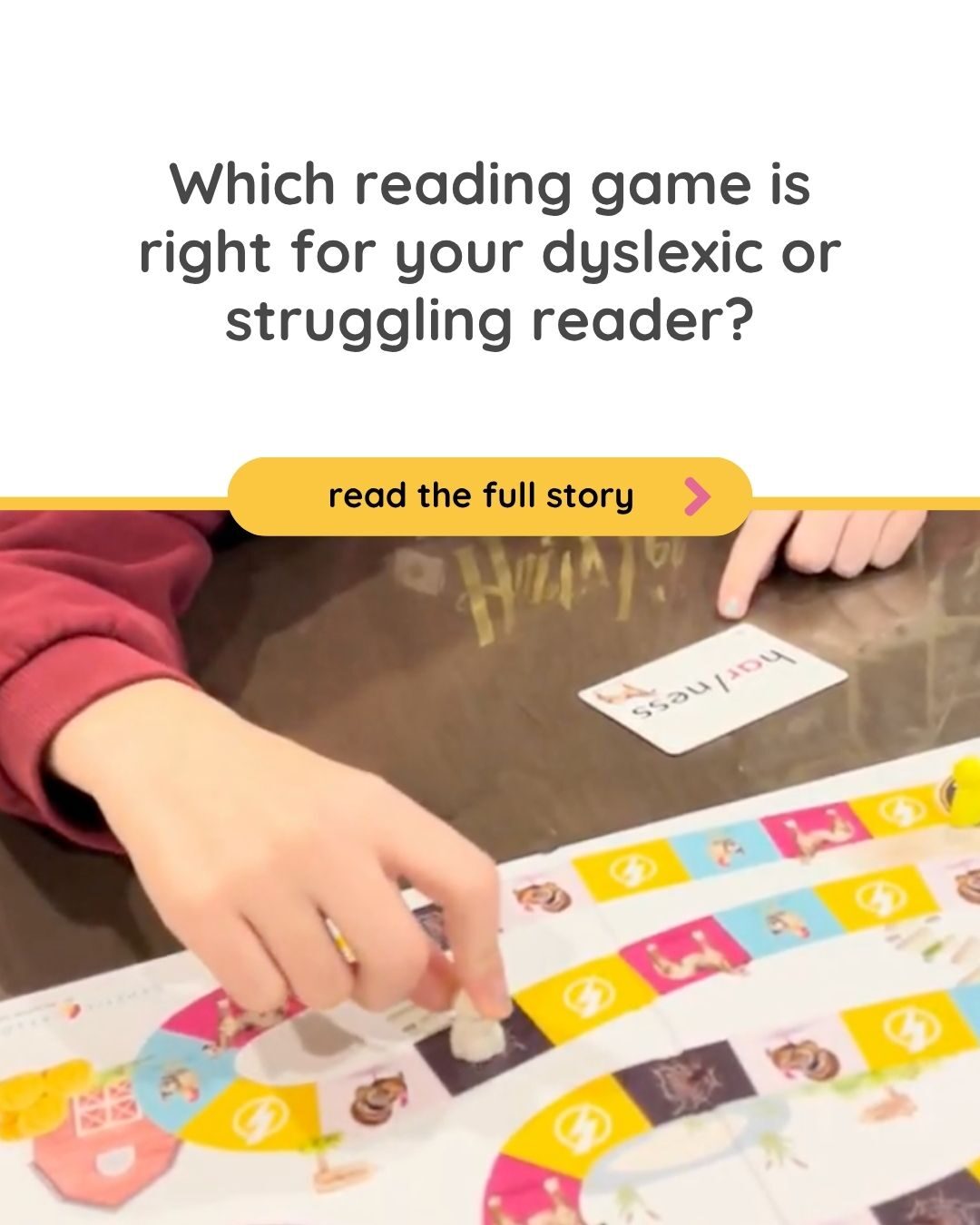
Keep reading practice short
You do not have to work on everything at once. Choose one skill and practice it for 10 or 15 minutes.
Repeat the game over several sessions before moving on. Dyslexic children often need more repetition, but that repetition does not have to feel like another worksheet.
Games give children a reason to keep looking, listening and trying.
Find the right place to begin
The best reading games for dyslexic children meet them at their current skill level and provide focused practice without making reading feel overwhelming.
Your child does not need more random practice. They need the right practice for the skill they are finding difficult.
Choose one game. Start with one level. Celebrate each small win.
Stop guessing. Start decoding.
The Genesis Reading Team

Discover more articles like this | Explore educational games to support learners and homeschooling.
