

Related Posts
Editor’s note: This article was written by Sheridan Hotung, Genesis Reading’s founder. We’re proud to keep sharing her passion, words and brilliant reading games to continue her mission to help dyslexic and struggling readers feel heard and progress with confidence.
Ever wonder why reading comes so easily to some kids, but feels like a battle for yours?
Here’s the truth: it’s not about effort, intelligence, or how many books you read at bedtime. For many children, especially those with dyslexia, reading is a neurological puzzle. But here’s the good news: once we understand the science of reading and how the brain processes language, we can teach in a way that actually works.
As a Certified Academic Language Therapist and a mom of two dyslexic kids, I’ve seen the transformation that happens when we stop guessing, and start teaching the way the brain learns best.
Let’s break down what’s going on inside your child’s brain, and how that knowledge can unlock real, measurable progress.
What’s Happening in the Brain When We Read?
Reading isn’t natural. We’re not born with a “reading” part of the brain. Instead, we build those connections over time, linking areas responsible for sound, sight, language, and memory. For kids with dyslexia, this process looks and feels different.
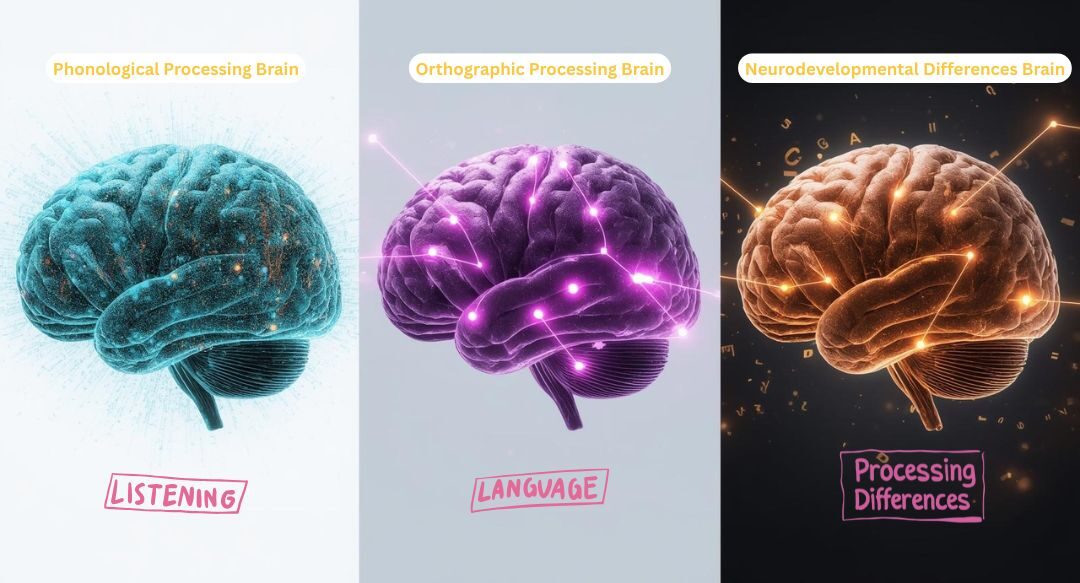
Here are the key brain systems involved in reading:
- Phonological Processing
- The brain’s ability to hear, separate, and play with sounds in spoken words.
- Think of it as the “sound engine” behind reading.
- If this system isn’t firing on all cylinders (as is often the case in dyslexia), it becomes hard to match letters to sounds, and decoding words becomes a constant struggle.
- Orthographic Processing
- The system that helps the brain recognize written words and remember how they’re spelled.
- Children with dyslexia often struggle here, leading to slow reading, inconsistent spelling, and a tendency to guess at words instead of decoding them.
- Neurodevelopmental Differences
- Dyslexia isn’t a reading problem, it’s a brain wiring difference.
- Brain scans show that dyslexic learners activate different areas (or activate areas less efficiently) during reading.
- This is not a reflection of intelligence. In fact, many dyslexic individuals are highly gifted in creativity, problem solving, and big-picture thinking.
How Brain Science Guides Real Reading Progress
Understanding why your child struggles helps us choose how to help. Here’s how we use that science to create breakthrough moments:
-
Multisensory Learning
-
Instruction taps into sight, sound, and touch, strengthening brain connections by using more than one pathway.
-
Example: say a word aloud, trace its letters in sand, and break it into syllables with hand claps.
-
This approach isn’t just fun, it’s neurologically powerful.
-
-
Explicit Phonics Instruction
-
Kids with dyslexia don’t just “pick up” phonics.
-
They need step-by-step teaching on how sounds connect to letters and patterns.
-
This explicit approach is the opposite of the guess-and-memorize method many kids rely on in early school years.
-
-
Structured Literacy Programs
-
Carefully designed to build skills in the right order: from simple to complex.
-
Focus areas include phonology, sound-symbol association, syllables, morphology, syntax, and comprehension.
-
It’s not random, it’s intentional, and it works.
-
-
Individualized Support
-
Every child’s brain is unique.
-
Personalized plans, often with the help of a Certified Academic Language Therapist, can make the difference between years of struggle and steady, meaningful progress.
-
-
Assistive Technology
-
Text-to-speech tools, audiobooks, and screen readers aren’t “cheating” – they remove barriers.
-
These tools give kids access to grade-level content while decoding skills are still developing.
-
Why Early Intervention Is Key in The Science of Reading
Research shows that early identification and support lead to the best outcomes. The earlier we act, the easier it is to build those brain connections and prevent the emotional toll of constant failure.
This is personal for me. My daughter received daily, year-round therapy for over two years. It wasn’t easy, but it was worth every minute. She went from frustration and tears… to reading Harry Potter and graduating high school with straight A’s.
The brain is incredibly adaptable, but the window of time for easy rewiring is short. Don’t wait. If your gut tells you something’s off, listen.
Turning Struggles Into Strengths
When we understand how a child’s brain is wired, we stop blaming, and start teaching with compassion, strategy, and science.
You’re not alone in this journey. And your child is not broken. With the right instruction, every child can become a reader.
Let’s change the narrative, one brain, one book, one breakthrough at a time.
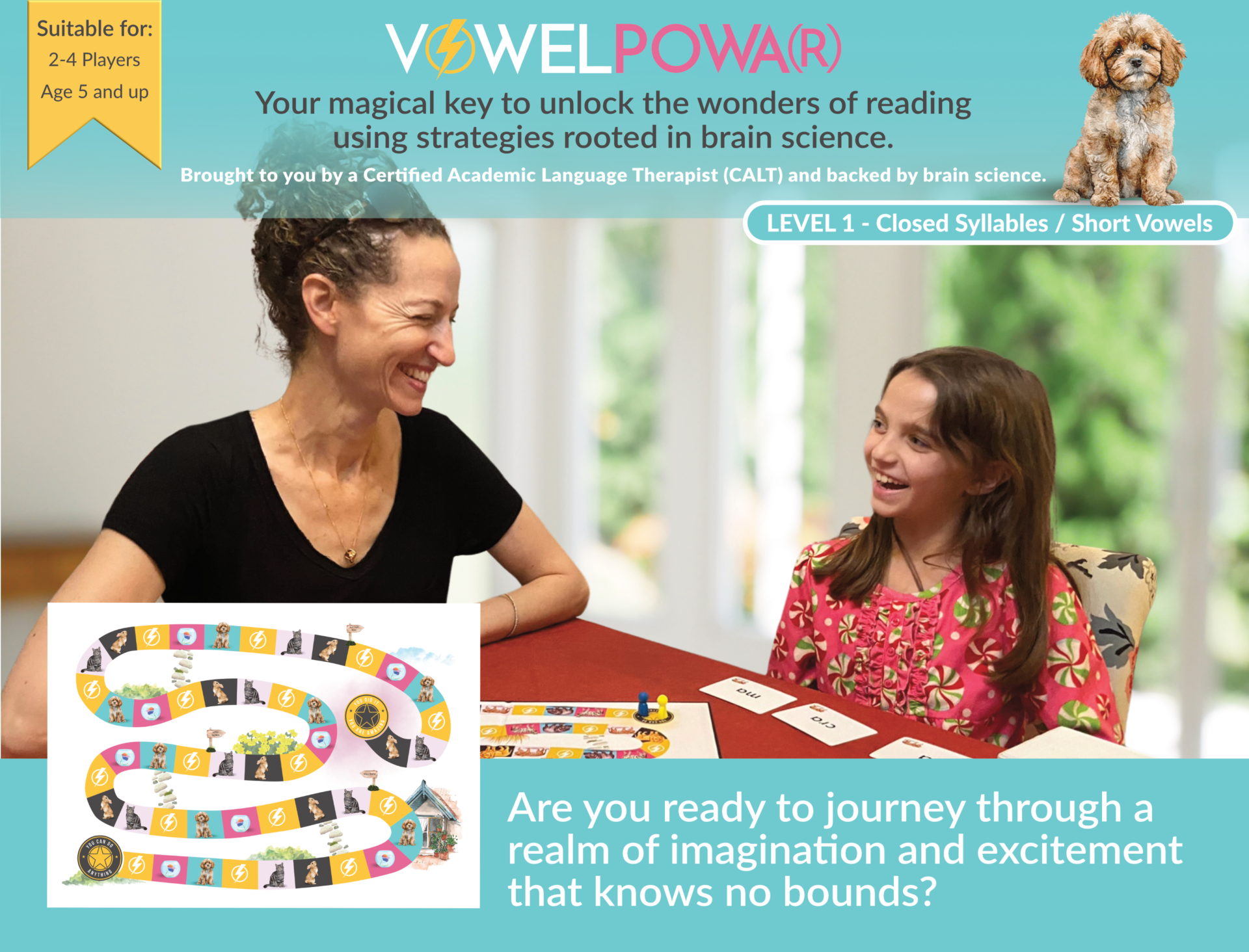
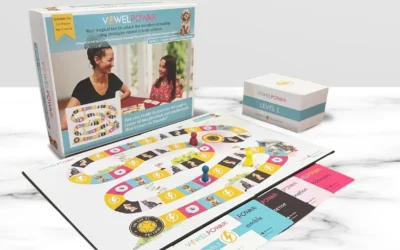
Have you heard about VOWEL POWA(R)™?
This powerful game isn’t just about reading. It’s about reclaiming joy, rewriting the story, and discovering your child’s inner storyteller.
Curious to see how it works? You can try a mini version of the game today, perfect for a quick play session with big impact.
The Genesis Reading Team

Discover more articles like this | Explore educational games to support learners and homeschooling.
