
Related Posts



Reading games for dyslexic children can make practice feel more manageable, but choosing the right one is not always easy. You know your child needs help with reading. The harder question is knowing where to start.
Should you practice vowels, longer words, letter teams, or speech sounds? Or does your child need help slowing down and reading the whole word?
Each Genesis Reading game focuses on a different reading skill. This guide will help you choose the right game for your child.
Choosing Reading Games for Dyslexic Children
Do not choose a game based only on your child’s age or grade.
Instead, notice what happens when they meet a word they do not know. Do they:
- guess after looking at the first letter?
- confuse vowel sounds?
- struggle with letter teams such as sh, ch or th?
- get stuck on longer words?
- mix up similar speech sounds?
Choose the challenge that sounds most familiar below.
My child guesses at words
Your child may look at the first letter and guess the rest.
They might read horse instead of house, or shop instead of shopping. This is common among dyslexic and struggling readers. They may rely on pictures, memory or what they think the sentence should say.
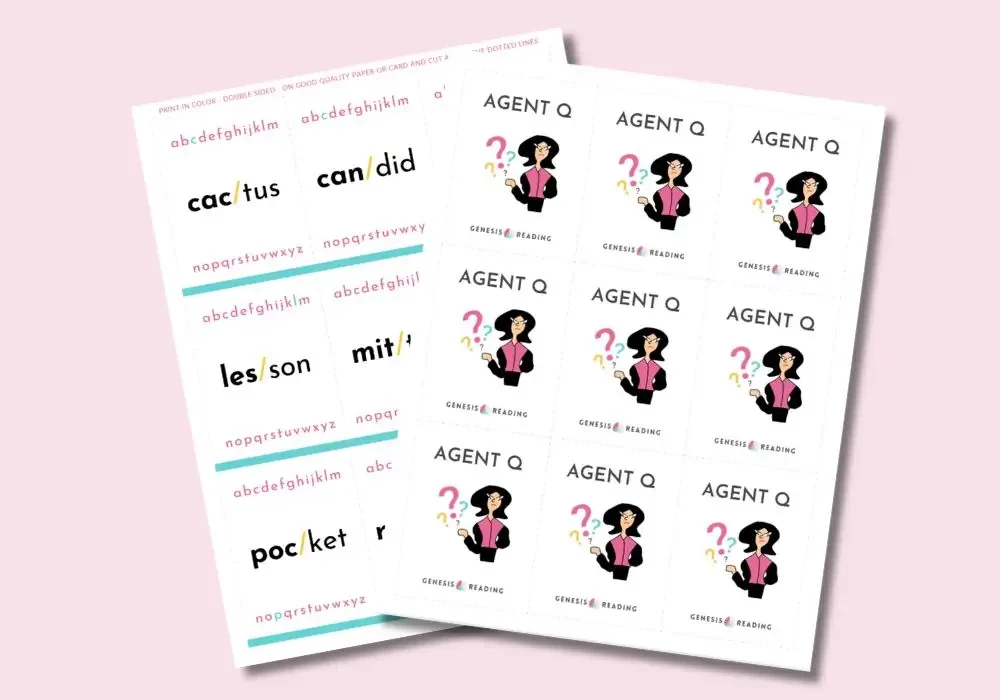
Try Agent Q
Agent Q encourages children to look at the whole word before making a match. Players decode word pairs while trying not to be left holding the Agent Q card. It is fast, simple and designed to build more accurate reading.
Choose Agent Q if your child:
- guesses from the first letter
- skips word endings
- confuses similar-looking words
- relies heavily on pictures
- needs to improve decoding accuracy
My child struggles with vowels and syllables
Vowels can be confusing. The vowel sounds differently in words such as cat, cake, car and boat.
Dyslexic children often need these patterns to be taught clearly and practiced many times.
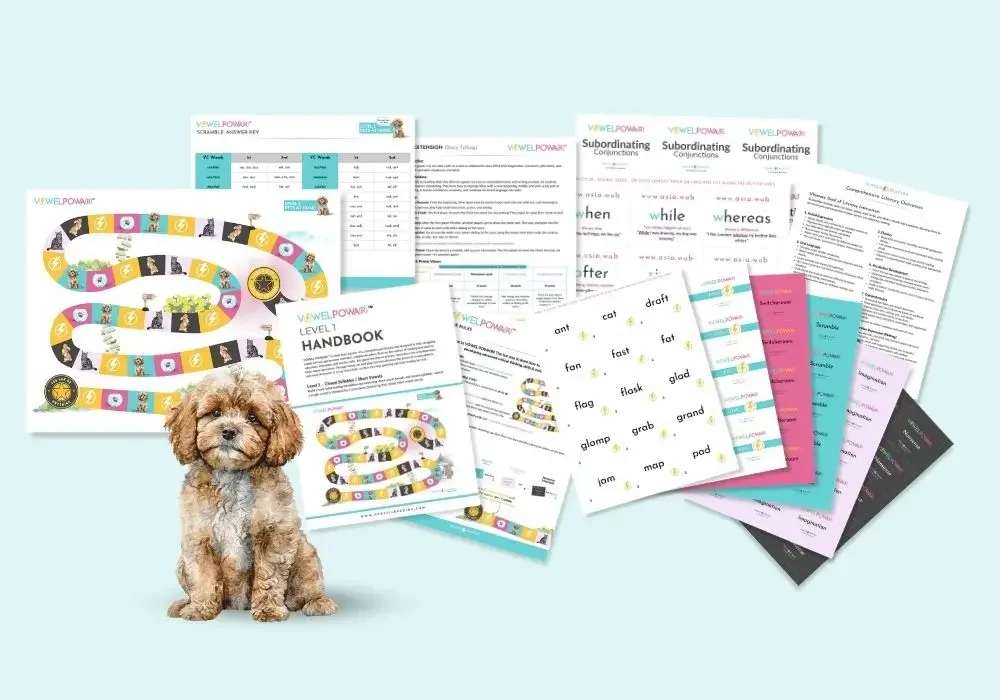
Try VOWEL POWA(R)™
VOWEL POWA(R)™ teaches six important syllable types:
- Closed syllables and short vowels
- Vowel teams and diphthongs
- Open syllables and long vowels
- Vowel-r syllables
- Vowel-consonant-e syllables
- Final stable syllables
Choose the level that matches the pattern your child is learning now.
Choose VOWEL POWA(R)™ if your child:
- mixes up short and long vowel sounds
- struggles with vowel teams
- finds longer words overwhelming
- needs help breaking words into syllables
- memorizes words instead of decoding them
My child struggles with sh, ch, th and other letter teams
Sometimes two letters work together to make one sound. Examples include sh, ch and th.
A dyslexic child may know each letter sound but still struggle to recognize the two letters as a team.
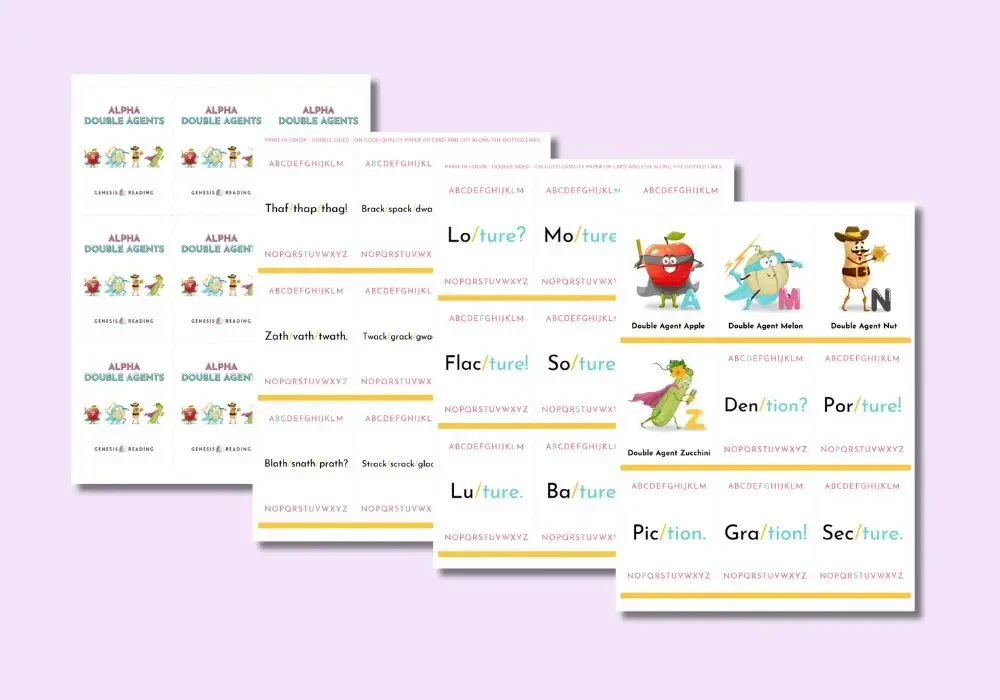
Try Alpha Double Agents
Alpha Double Agents turns phonics practice into a spy mission. Players match sound patterns, decode words and try to outsmart their opponents.
Choose Alpha Double Agents if your child:
- reads the letters in a digraph separately
- forgets common letter teams
- confuses sh, ch or th
- needs repeated phonics practice
- enjoys competitive games
My child struggles with vowels in longer words
Longer words can be difficult because they contain more than one syllable. Some also contain the schwa, which is the weak vowel sound heard in words such as about, sofa and animal.
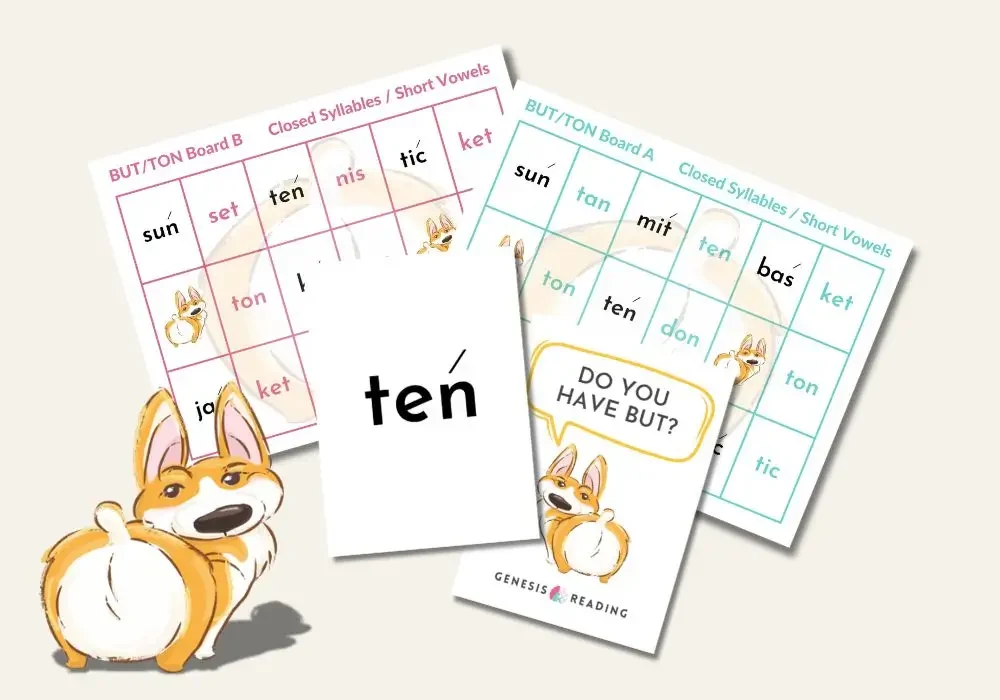
Try Do You Have But?
Do You Have But? helps children break two-syllable words into smaller parts. Players sound out words, match syllables and practice hearing which part of the word is stressed.
The name gets children laughing, while the game builds serious reading skills.
Choose Do You Have But? if your child:
- becomes stuck on two-syllable words
- struggles to hear unstressed vowels
- loses accuracy when words get longer
- spells words exactly as they sound
- needs help dividing words into parts
My child mixes up speech sounds
Reading begins with speech sounds. Before children connect sounds to letters, they need to hear how the sounds are different.
Some dyslexic children confuse sounds made in similar ways, such as p and b or f and v.
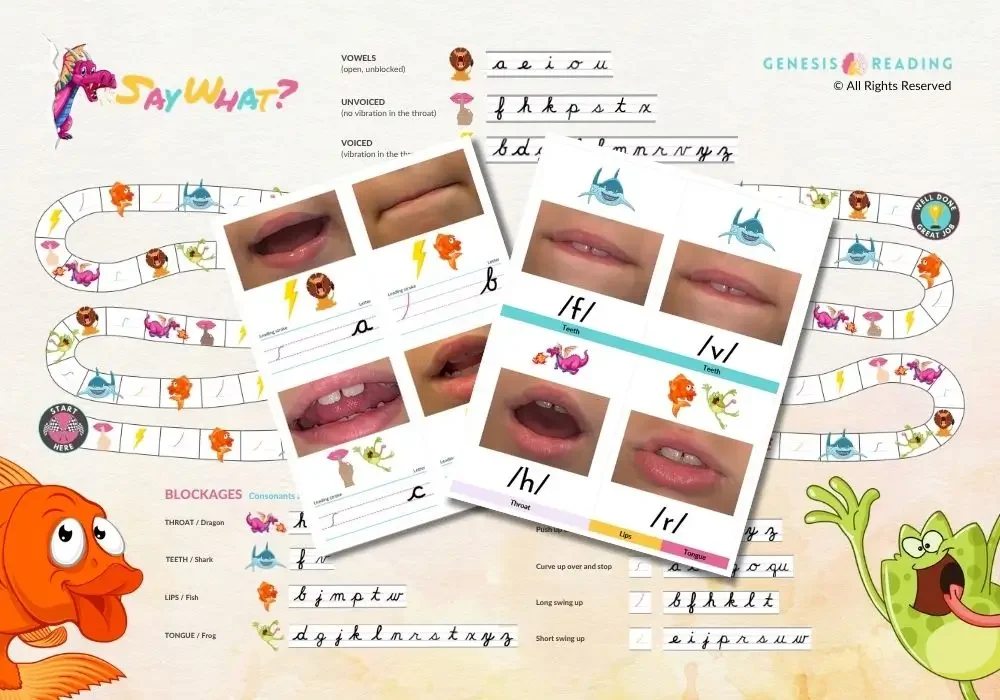
Try Say What?
Say What? helps children see, hear and feel how speech sounds are made. They explore what the lips, tongue, teeth and throat are doing when they speak.
Choose Say What? if your child:
- confuses similar sounds
- needs early sound-awareness practice
- is preparing to learn letters and sounds
- benefits from movement and hands-on learning
- needs help understanding how sounds are made
Keep reading practice short
You do not have to work on everything at once. Choose one skill and practice it for 10 or 15 minutes.
Repeat the game over several sessions before moving on. Dyslexic children often need more repetition, but that repetition does not have to feel like another worksheet.
Games give children a reason to keep looking, listening and trying.
Find the right place to begin
The best reading games for dyslexic children meet them at their current skill level and provide focused practice without making reading feel overwhelming.
Your child does not need more random practice. They need the right practice for the skill they are finding difficult.
Choose one game. Start with one level. Celebrate each small win.
Stop guessing. Start decoding.
The Genesis Reading Team

Discover more articles like this | Explore educational games to support learners and homeschooling.
