
Related Posts


Does your child confuse speech sounds such as p and b, or f and v? It can be worrying, especially when the same confusion appears during reading or spelling. Often, the issue is not effort. These sounds are made in very similar ways, and your child may need help noticing exactly how they differ.
Why do some children confuse speech sounds?
Some speech sounds are made with almost the same mouth movement. For p and b, the lips come together in the same way. For f and v, the teeth and lower lip meet in the same place. One important difference is voicing: b and v make the throat vibrate, while p and f do not.
When a child has difficulty noticing individual speech sounds, these small differences can be hard to hear. This can affect many learners, including some children with dyslexia or other phonological-awareness difficulties. It is not a sign that a child is lazy or not listening.
What does this have to do with reading?
Written letters represent the sounds in spoken words. To decode a new word, a child needs to notice the sounds, connect them to letters, and blend them together. Speech-sound awareness and letter knowledge develop together, so helping a child hear, see, and feel a contrast can make the alphabetic code more concrete.
A quick way to make the difference visible
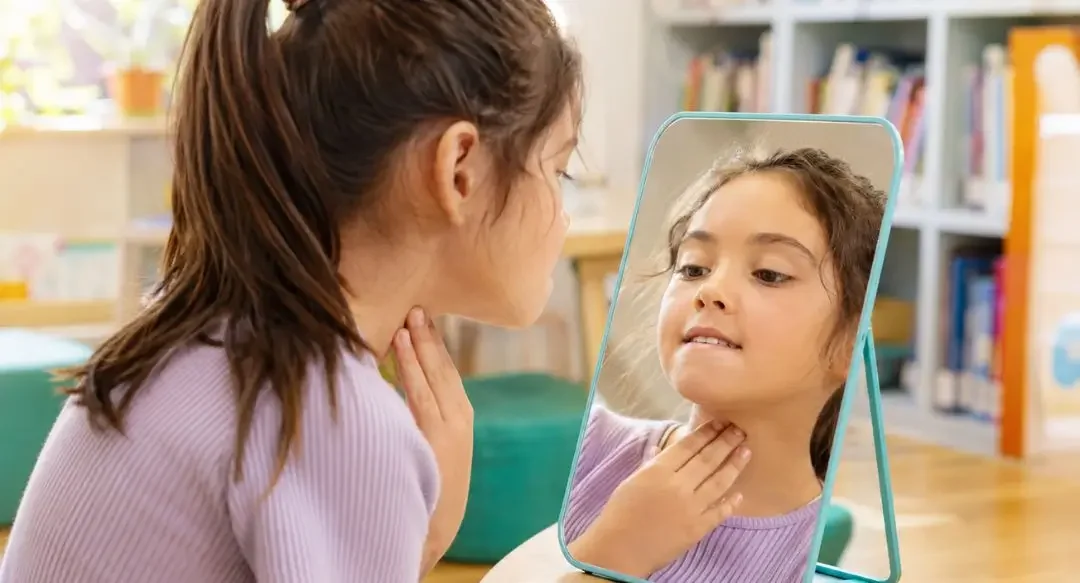
Try p and b together in front of a mirror:
- Watch the lips close and release for both sounds.
- Place two fingers gently on the throat.
- Say p, then b. Can your child feel the buzz on b?
You can repeat the same idea with f and v. Keep it light and brief. The goal is not perfect performance, but a clearer, more memorable contrast.
How Say What? turns sound awareness into play
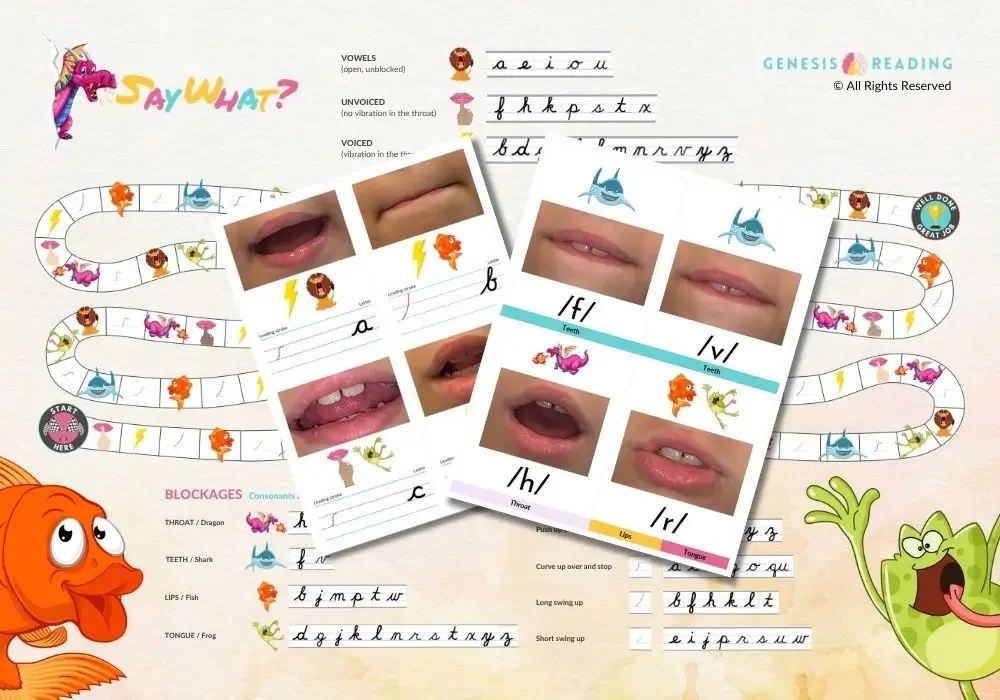
Say What? is a printable, hands-on game that helps children explore whether a sound is voiced or unvoiced, then whether it is blocked or unblocked. As they play, they notice what their lips, tongue, teeth, and throat are doing. This makes speech-sound practice easier to see, feel, discuss, and repeat.
Every small win matters. A sound your child can see and feel is often easier to remember.
If your child has persistent difficulty hearing or producing speech sounds, speak with their teacher, reading specialist, or speech-language pathologist. A game can support practice, but it does not replace an individual assessment when one is needed.
Try Say What?
Say What? helps children see, hear and feel how speech sounds are made. They explore what the lips, tongue, teeth and throat are doing when they speak.
Choose Say What? if your child:
- confuses similar sounds
- needs early sound-awareness practice
- is preparing to learn letters and sounds
- benefits from movement and hands-on learning
- needs help understanding how sounds are made
Useful background reading: International Dyslexia Association | Reading Rockets
The Genesis Reading Team

Discover more articles like this | Explore educational games to support learners and homeschooling.
